
Summer is in full swing, and let’s be honest, no one’s in the mood for heavy, brooding dramas. Those will have to wait for October; when the nights get longer, the air gets cooler, and conveniently, new seasons drop and pilot episodes premiere.
For now, it’s all about light, feel-good TV. So I’m recommending comedies; some that can already be labeld as classics which I’ve only just gotten around to watching, and some fresh, newer gems.

Nobody Wants This
I loved this show from the very first episode, and I’m not surprised. I’ve long enjoyed the Foster sisters’ sharp humour and knack for comedic production. Yes, at times, the sibling rivalry can be a bit much, but they’re self-aware enough to lean into it, turning it into a career that extends beyond television and spills into fashion. Their clothing label, Favourite Daughter, playfully pokes fun at their trademark sisterly competition, perhaps for the attention of their no-so “Barely Famous” famous father (reference intended), whose string of marriages has brought in a small army of half- and step-siblings (The Hadids and in turn, Kardashians included), only adding fuel to the rivalry.
It’s also arguably the most Millennial of shows, if only for casting Adam Brody and Kristen Bell as the leads, hitting right in the sweet spot of every Millennial’s nostalgia. It’s a Veronica Mars/Gossip Girl voiceover-meets-The OC fantasy mashup. And if that wasn’t shriek-worthy enough, Queen B herself, Leighton Meester, Adam Brody’s real-life wife, has joined as a regular for season two.
The show delves into dating, religion, spirituality, family, and immigration, not with the depth of a drama, because at heart it’s a comedy, but still with surprising thoughtfulness. It’s not superficial. The conversations land. And some are downright swoon-worthy, especially whenever the “hot rabbi” appears, proving that non-toxic, emotionally mature Millennial men can exist… even if only in fiction.
Available on Netflix.
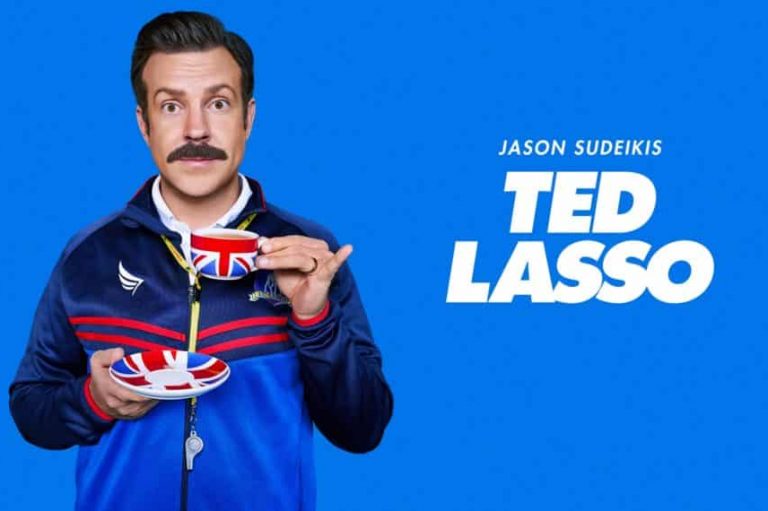
Ted Lasso
On paper, Ted Lasso is a sports comedy about a guy who knows nothing about British football. Which, frankly, is exactly why I avoided it. Football, whether the universal kind or the one the Americans insist on calling “football”, only interests me during the Euro Cup or World Cup. A whole show about it? No, thank you. That can stay away from my screen, and any mention of it away from my blog.
I can’t remember if it was because one of my favourite bands sings the intro, or because I stumbled across an old NBC Sports promo on YouTube, back when they’d just bought the U.S. rights to the English Premier League and were trying to get Americans excited about British football. But a few months ago I caved. I watched the first episode. And just like that (urgh, I know, sorry), I was helplessly, hopelessly in love, with the entire cast, flaws, disasters, and all. And while cultural differences do come up, it’s more about playfully poking fun at life on the other side of the pond than making a mockery of it.
It’s brimming with razor-sharp writing, characters you actually root for, and enough emotional gut punches to make you forget you’re watching something wholesome. It’s a comedy show about football and footballers, but one that doesn’t shy away from the heavy stuff: mental health, betrayal, relationship abuse, divorce, parental neglect, racism, and yes, sexism. (In a show about football? What?!)
Watch it. You’ll thank me. And you’ll thank me again when I tell you the fourth season is being filmed as we speak.
Available on Apple TV.

Schitt’s Creek
Who knew Canadians could be this funny? But of course, as expected from America’s northern neighbours, kindness and warmth are the very foundation of this show. Written and produced by father-and-son duo Eugene and Daniel Levy, Schitt’s Creek radiates a sense of strength and connection, made all the sweeter when you discover that Sarah Levy (Daniel’s sister and Eugene’s daughter) also plays a recurring role in the series.
A classic riches-to-rags tale, the wealthy Rose family finds themselves in quite a pickle when Johnny Rose’s (the family patriarch) account manager is caught embezzling funds and neglecting tax payments. And so when he government seizes their assets, the Roses are left with nothing but a single, rather questionable asset; an entire small town they once bought as a joke, called nothing other than “Schitt’s Creek”.
Although the show built a loyal fan base from its premiere, it largely flew under the radar of critics and awards bodies until its final season in 2020, when, amid a world panicking and grieving through a pandemic, it swept the Emmys clean. Suddenly, it was thrust into the limelight for an audience stuck at home in quarantine or lockdown, eager for a feel-good story about hope.
It’s a series that depicts women without harassment, the LGBTQ+ community without bias, a fall from grace without cruelty, and the pursuit of financial recovery without judgment.
I’ll admit it took me a full season to get into the rhythm, but Schitt’s Creek excels at creating well-defined characters. They grow, they change, yet they remain utterly true to who they are.
What a maple syrup of a show; sweet, rich with flavour, and delightfully consistent from start to finish.
Available on Netflix.

Shrinking
I shan’t lie. I had high hopes for Shrinking. The cast alone was enough to get me pinned to my TV screen and then learning that Ted Lasso’s Brett Goldstein is among the writers and producers left no doubt that it was a show that should be watched. And so that’s what M and I did. Binge several episodes a night.
It starts off strong. The first few episodes are sharp, funny, and full of promise. While the pacing slows a bit in the middle, the show doesn’t lose its charm, and it’s still absolutely worth a watch.
One of its biggest strengths is the dynamic between Harrison Ford’s stoic, bone-dry therapist and Jason Segel’s goofy yet grief-stricken colleague slash mentee. Their unlikely friendship is both hilarious and unexpectedly heartwarming, with each bringing out something essential in the other. It’s no surprise the chemistry works so well, as Brett Goldstein’s trademark blend of humour and emotional punch is unmistakable.
Beyond the laughs, Shrinking isn’t afraid to tackle weightier themes: the complexities of father–daughter relationships, the realities of living with Parkinson’s, the ache of losing a spouse or a parent, and the struggles of navigating mental health.
As someone who has benefited enormously from years of therapy, and will forever proclaim it one of the best investments you can make in yourself, a hill I will happily die on, if watching this show inspires even one person to start therapy, I’ll consider my job done.
Available on Apple TV.

Platonic
Platonic is clever, and it’s chaotic. Rose Byrne and Seth Rogen star as Sylvia and Will, two former best friends who reconnect in their forties. While most shows with this setup lean heavily on the “will-they-won’t-they” trope, Platonic flips the script. Instead, it explores what happens when two people with decades of shared history, and wildly different present-day lives, show up in each other’s worlds again, influencing decisions, sparking chaos, and a fresh “outside-looking-in” perspective.
Sylvia is an Australian lawyer who hasn’t practiced in the 13 years she’s been home raising her kids. She’s taken on the role of full-time mum and homemaker while her husband, played by the ridiculously good-looking Luke Macfarlane (Brothers and Sisters), has been climbing the ladder to partner at his law firm. Now that their youngest has started kindergarten, Sylvia finds herself feeling invisible, lost, unfulfilled, and without a clear purpose.
Will, on the other hand, is a bar owner, recently divorced from the ever-gorgeous and ever-successful Audrey, the very reason for the original falling out between the two best friends. (In a later confrontation between Will, Audrey, and Sylvia, however, we learn that Audrey isn’t necessarily the villain she’s been made out to be. She’s simply a confident woman who knows how to create and enforce boundaries.) Still reeling from the breakup and stung by the knowledge that Audrey has moved on, Will’s world is unsteady.
And so after years of estrangement, Sylvia and Will reconnect, and from there, havoc ensues.
While Platonic is loaded with laughs, it’s also a surprisingly perceptive look at midlife identity crises, the boundaries of marriage, the bittersweet realities of growing older, and how friendships evolve, explode, or fade away. Byrne and Rogen’s effortless, utterly platonic chemistry is undeniable, making Platonic a warm yet messy reminder that friendships can be just as transformative, or disruptive, as any romance.
Available on Apple TV.
And that’s a wrap for the summer. I’ll be back in autumn with, hopefully, more shows and films to binge, indulge in, or both. May your summer be balmy, bright, and shimmering in sunshine.







 Collecting Zip Codes
Leave a comment