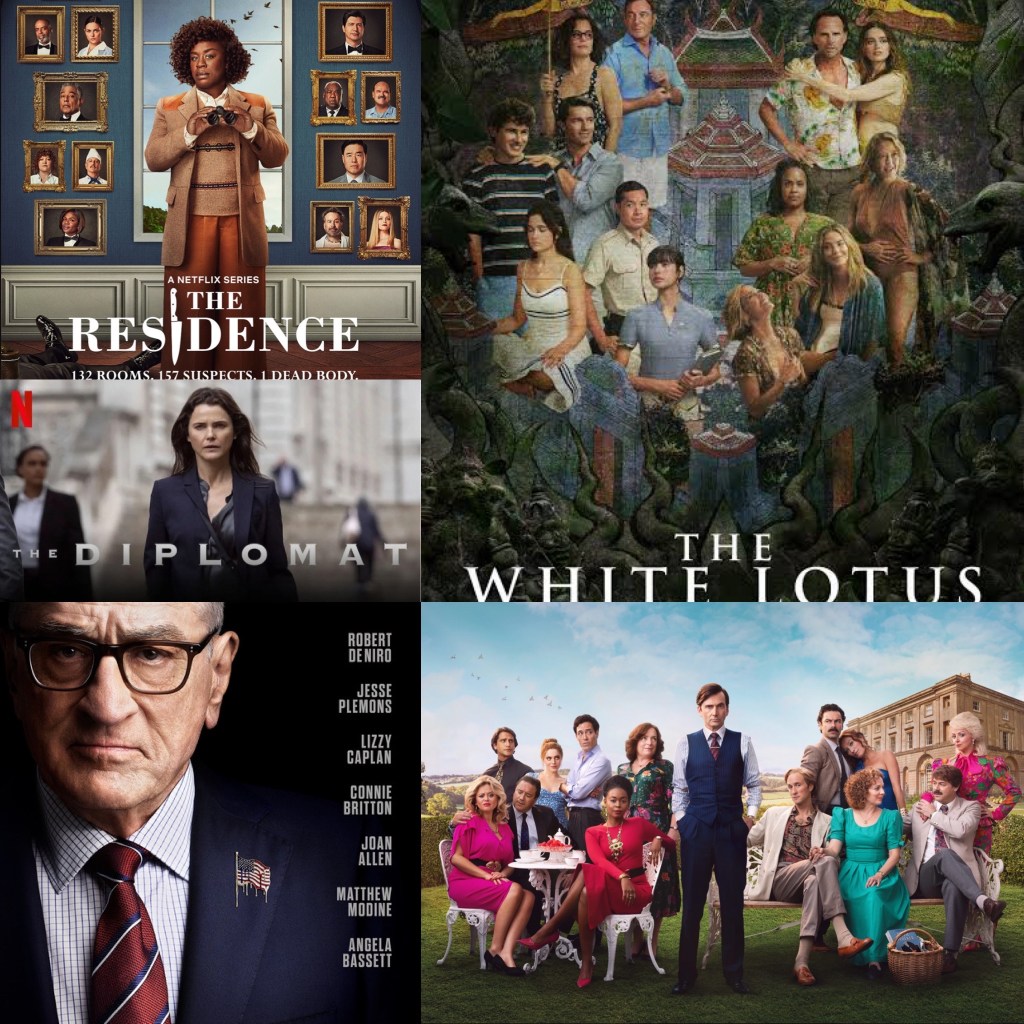
Spring has finally sprung, and even though it took its sweet time to give us that familiar feeling of warmth and renewal (it was pouring until dawn today), it’s finally here. And so is the outdated ritual of daylight saving. But that’s a rant for another day.
Spring brings with it for us Iranians and Persian speakers a new year; our Nowruz. On the 20th of March (The Vernal Equinox falls on the 21st of March usually except for Leap Years where the 20th hosts the beginning of spring) we bid farewell to winter and welcomed a new season and a new year. So after a relatively long hiatus from writing on here, I’m back to talk about my most recent (and some not-so-recent) binges, all of which share one thing in common: Doomsday mysteries filled with villainous, horrendous crimes and criminals, with just the right touch of “Whodunnit.”
Rivals (Disney +)
Aristocrats Behaving Badly: The Most Fun You’ll Have in Shoulder Pads
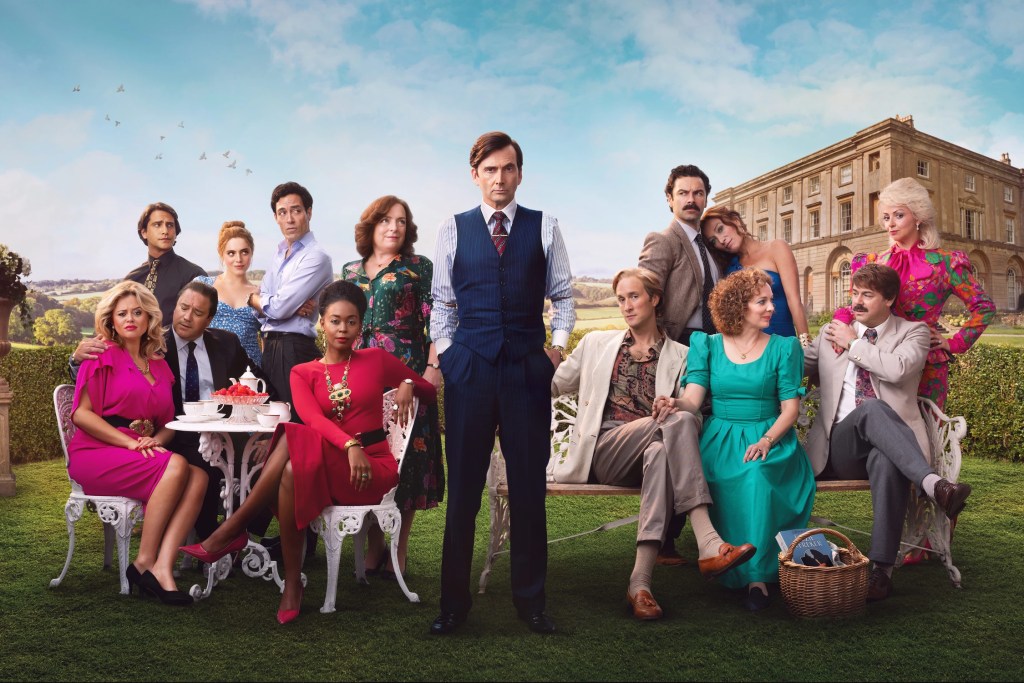
First up, my personal favourite: Rivals. Although it’s not necessarily a Doomsday thriller mystery, it does involve some outrageous crimes and criminals. The Disney+ adaptation of Jilly Cooper’s 1988 novel takes viewers on a wild ride through the scandalous world of 1980s media moguls and aristocratic high society. The setting is Rutshire, a fictional county with lush fields and a deliciously corrupt elite, giving a whole new meaning to “eat the rich.” It is in Rushire where sex is passionate (and mostly not exclusive), wealth is crude, and loyalty is crass. This show somehow manages to be both a throwback and a breath of fresh air, serving up 1980s scandal in all its big-haired, high-society glory.
At the center of it all is Rupert Campbell-Black (played with smirking ease by Alex Hassell), a former Olympic showjumper turned MP with a god complex and a bedroom agenda, and a jawline that gives Benedict Cumberbatch a run for his money . He’s despised and worshiped by a full cast of characters who are just as dramatic and delightfully awful, including the brooding Declan O’Hara and Lord Baddingham.
Visually, Rivals is pure eye candy. A feast for the senses, an aesthetic delight. The production masterfully captures the over-the-top extravagance of the decade, opulent country homes, bold fashion, and a soundtrack packed with iconic ’80s hits.
Of course, it hasn’t escaped the sharp tongues of more prudish viewers. The overtly sexual content makes it an easy target for the “lacks depth” accusation, though, let’s be honest, that’s missing the point.
Whether you’re into steamy content or not, there’s no denying that Rivals is an absolute riot. And if it does one thing perfectly, it’s making the ’80s feel sexy. Especially for us Millennials, who were born in that decade but never really got to experience it as something worth romanticizing.
The ’60s and ’70s are our vintage eras—the former wrapped in feminist rebellion and liberation, the latter fuelling our festival looks and Coachella-core. We remember the ’90s as the age of heroin chic and supermodels dominating our magazine pages and screens. The noughties? A cute and chaotic era of Britney, Christina, boybands, aggressive layering, and those unforgivable low-rise jeans that, for some reason, are back on the racks for Gen Alpha to call “trendy”, proving unforgivable regrettably is not always forgettable.
The ’80s, though? Loud, brash, and cartoonish. Bright colours, big hair, and shoulder pads that could knock your eye out. We were never really offered a way into that world. Until now.
Rivals cracks open that door to nostalgia and shows us a decade that was as sexy as it was unapologetically bold.
Zero Day (Netflix)
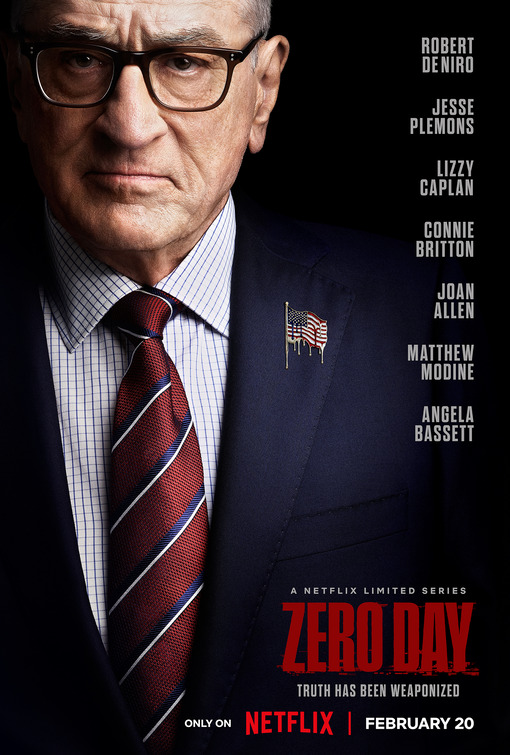
Let’s move on to Zero Day, a political thriller and Netflix original that somehow managed to rope in Robert De Niro for his maiden voyage from the Silver Screen to the small screen. Hard to believe that the De Niro we know, love, and respect had never headlined a show before now.
He plays a former U.S. president named George Mullen, who gets pulled back into politics after a mysterious cyberattack briefly shuts down the country. And even though the blackout lasts only a few seconds, America spirals into full-blown panic and doom mode.
George Mullen refused to run for a second term and has been dealing with terms like “traitor” and “quitter” since he retired. His daughter, a New York senator opposes many of his father’s decisions, one being the fact that he refuses to acknowledge the reason for her brother’s death (his own son) as suicide, referring to it as an overdose.
The plot taps right into the modern-day paranoia we’ve all felt at some point—especially post-COVID: cyberattacks, shady government backchannels, public freak-outs, and all the messy chaos that comes with the digital age. De Niro’s version of Mullen feels like a man who’s seen too much and trusts absolutely no one. He’s quiet, intense, a little worn down, and you just know there’s more going on behind those eyes than the script gives away.
Zero Day works best if you treat it like a prestige political drama with thriller vibes. It’s not reinventing the genre, but it definitely delivers on tension, mood, and the kind of storyline you’d expect from a doomsday setup. The cast doesn’t hurt either (and that’s me seriously underselling it).
It’s very much a popcorn-and-wine kind of binge-watch—solid, entertaining, and just grounded enough to make you wonder how close fiction is to reality. It probably won’t win any Emmys for screenwriting, but it won’t leave you disappointed either.

The Diplomat — Season 2 (Netflix)
Kate Wyler is back (in fact she never left London), and international politics have never been this messy.
The second season of The Diplomat picks up right where we left off, mid-crisis, mid-bombshell, and mid-argument. Kate Wyler (Keri Russell) is still the U.S. ambassador to the UK, still impossibly competent under pressure, and still trying to hold her personal life together with duct tape and diplomacy.
One of the best surprises this season is the arrival of Allison Janney as Vice President Grace Penn. She brings this perfect mix of cool confidence and dry wit that balances beautifully with Russell’s high-strung energy. Their scenes together are smart, tense, and totally addicting, like watching two seasoned chess players with trust issues.
Visually and stylistically, the show is still slick and sharp. The dialogue snaps, the pacing keeps things moving, and the tension never feels forced. Even when nothing explodes, the stakes always feel real. However, Kerri Russell’s performance feels forced; as if she doesn’t want to be there. And then there’s the styling. The wardrobe department either has a very specific sense of humor or a very odd idea of what a diplomat under pressure looks like. The unbrushed hair, frumpy blazers, and crossbody messenger bags don’t exactly scream “global leader holding it all together.” But maybe that’s the point, Kate isn’t supposed to be polished. She’s meant to be unraveling.
It’s only six episodes. In my opinion the perfect number of episodes for a crime/political thriller series. But some plot threads feel a bit rushed or underdeveloped. There’s also quite a bit left unresolved by the finale. If like clean endings, you might feel a little underwhelmed. But if you’re one to enjoy the high-stakes politics, personal drama, and killer performances, then you’re going to like this season.
The Residence (Netflix)
Agatha Christie, but make it the White House.
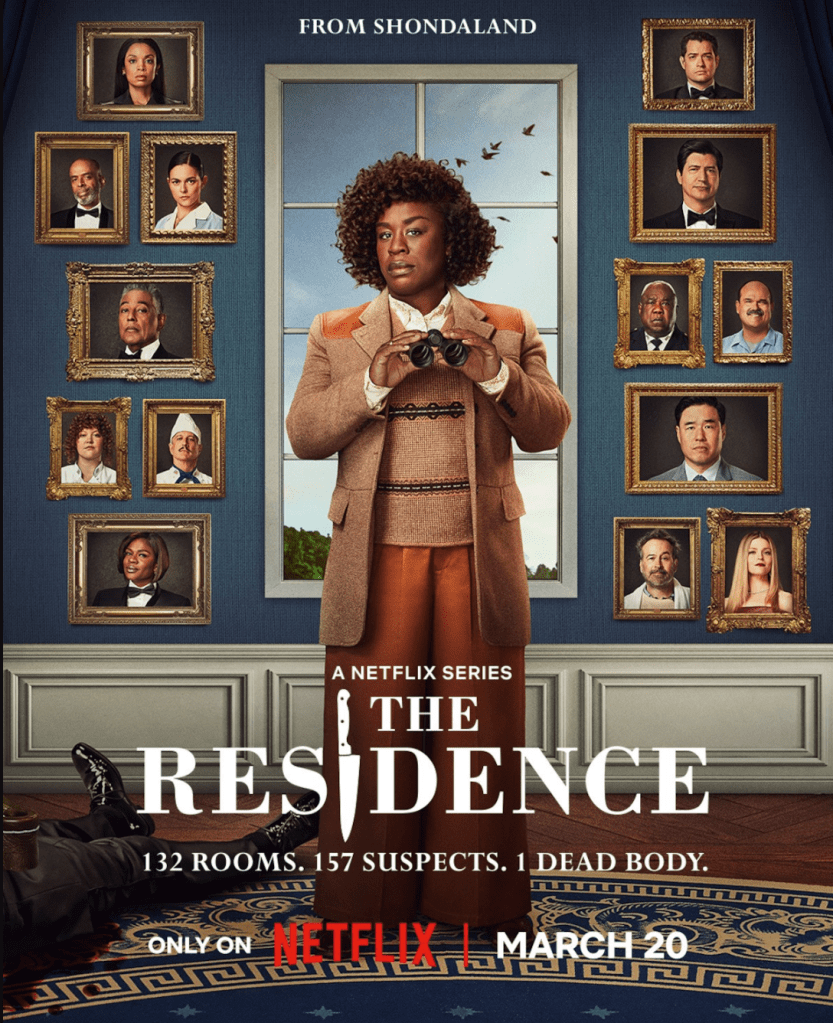
Netflix’s The Residence is very much a Murder on the Orient Express slash Death on the Nile wannabe, and it’s not even subtle about it. In fact, they name-drop Orient Express in the dialogue, just in case the inspiration wasn’t already glaringly obvious. I guess they saw the comparisons in blogpost reviews coming and they beat us to it. After all, can you mock someone when they did it first?
This is a classic closed-circle whodunit, complete with glamorous guests, a grand setting, and enough side-eye to power the East Wing.
The twist? Instead of a train or a riverboat, the murder takes place in the White House during a state dinner for the Australian Prime Minister. Fancy.
Uzo Aduba stars as Cordelia Cupp, a quirky, offbeat detective with a sharp tongue and an eye for detail. Think Poirot, but in better shoes and zero mustache. She’s brought in to investigate the suspicious death of the White House’s chief usher, and from there, it’s a textbook game of “who had the motive, means, and opportunity?”
The show fully commits to its Christie homage, from the cast of eccentric suspects to the episodic structure, and sometimes, it really works. It’s playful, campy, and honestly, kind of fun to watch the White House get the murder mystery treatment. But where it stumbles is in trying to stretch that formula too far. Some twists feel overly familiar, the pacing slows considerably in the middle, and it starts to feel like a stretched-out version of something you’ve already seen, just done better.
It’s enjoyable, yes, but by episode four, you might find yourself wishing they’d wrapped it all up a little sooner. That said, the humor is a high point. Uzo Aduba and Randall Park bounce off each other with brilliant comedic timing, turning their frustrated banter into one of the show’s real highlights. So yes, it’s worth a watch, just don’t expect it to outsmart its own influences.

The White Lotus — Season Three (HBO)
Freshly stamped passports, first-class dysfunction, welcome back to The White Lotus; but this time make it a spiritual experience.
Season three checks us back into our favorite resort chain for the fabulously unhinged. We swap Sicily’s sun-drenched coastline for the lush, spiritual weight of Thailand. The air is heavy with humidity, and so is the tension, which hits you from the moment the boat docks and we’re introduced (once again) to a new cast of deeply privileged guests, all greeted with unsettling cheer by The White Lotus staff. At this point, it’s a franchise signature.
I haven’t made it through all the released episodes yet (I’m savouring them, one by one), but even just a few episodes in, I feel confident saying this: The White Lotus is pure genius.
Mike White continues to phase us with the sharpness of tone, the dark humour, and painfully observant edits.The formula stays true to the predecessors: drop a group of wealthy strangers into paradise, add a heavy dose of simmering resentment, and wait for it all to unravel, implode and explode all at once.
What’s especially striking this season is how it digs deeper than satire. It doesn’t just mock wealth and luxury, it challenges the idea of spiritual tourism and transformation as something only the ultra-rich can afford. Thailand isn’t just a scenic destination; it plays a meaningful role in how the story unfolds, both visually and thematically.
The acting is exquisite. The microexpressions and veiled jabs contribute to a social tension so thick you could slice it with a butter knife offered at the resort’s breakfast buffet. The female friendships are especially biting this season; the satire so sharp it almost feels like a personal attack. And yet, it’s all painfully recognizable. That’s what I love about The White Lotus, nearly every character is absolutely detestable, save for one. And somehow, they’re never overdone. There is no exaggeration when it comes to the characters. They’re subtle, believable assholes. The kind we all unfortunately know.
I do have one bone to pick with the creators, though—why on earth did they change the opening score? That eerie, instantly recognizable melody of doom was a signature of the show (and the resort itself), sending shivers down your spine the moment it kicked in. It was iconic, unsettling, and unforgettable. Now? It just doesn’t hit the same.
I have high hopes for the rest of this season, and I’d love to do a deeper dive once it’s wrapped, especially on the show’s take on privilege, social performance, and the evolving definition of luxury. But for now, I’ll be devouring each new episode with a familiar sense of dread. Because let’s be honest: no one ever watches The White Lotus entirely at ease.





 Collecting Zip Codes
Leave a comment